
Around the Clock Garage Door
Garage door repair, installation and system care
Service planning for springs, openers, off-track doors, cables, rollers, panels, maintenance, and complete door installation.
 Established Around the Clock service identity
Garage door specialists
A clear repair path starts with the complete door system.
Garage door service information and appointment planning.
Explore garage door repairWhat we offer
Garage door services
Service gallery
Real garage door systems and components
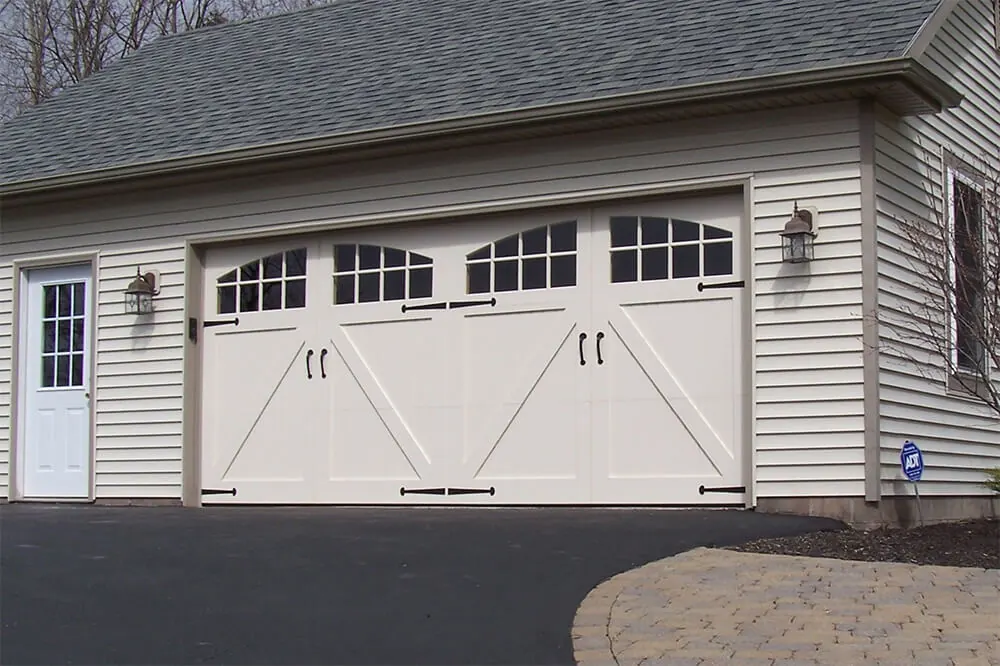
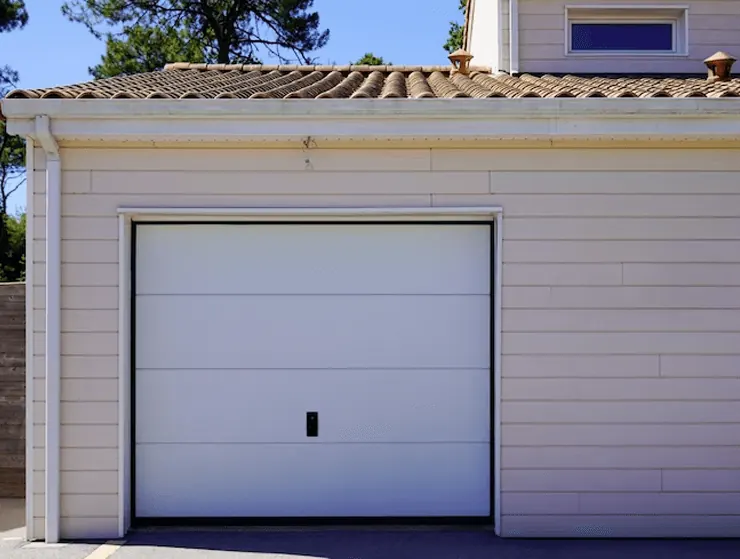
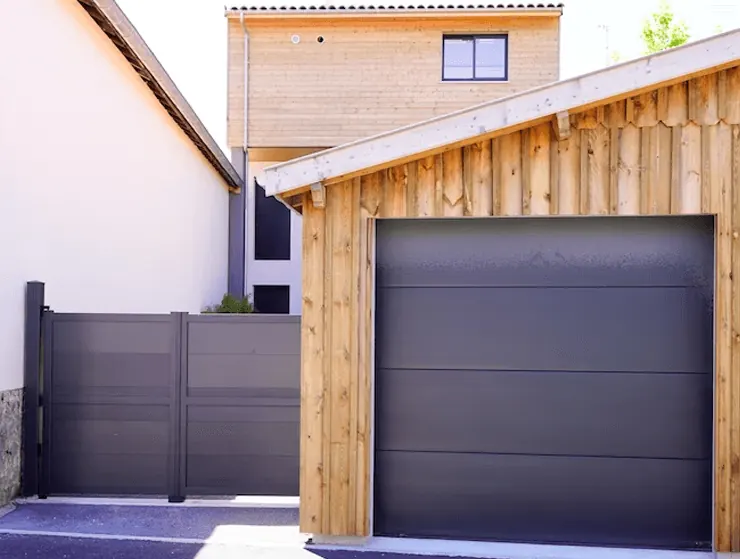
Around the Clock service guide
Service overview
When a garage door quits on you, it rarely picks a convenient moment. Maybe it groaned halfway up and froze, or slammed down harder than it should, or simply refuses to budge with your car trapped inside. Around The Clock Garage Door handles garage door repair for homeowners and businesses across the San Francisco Bay Area and Northern California, and because appointments are scheduled across the service area, "I'll deal with it tomorrow" is never your only option.
Around the Clock service guide
The problems we fix every day
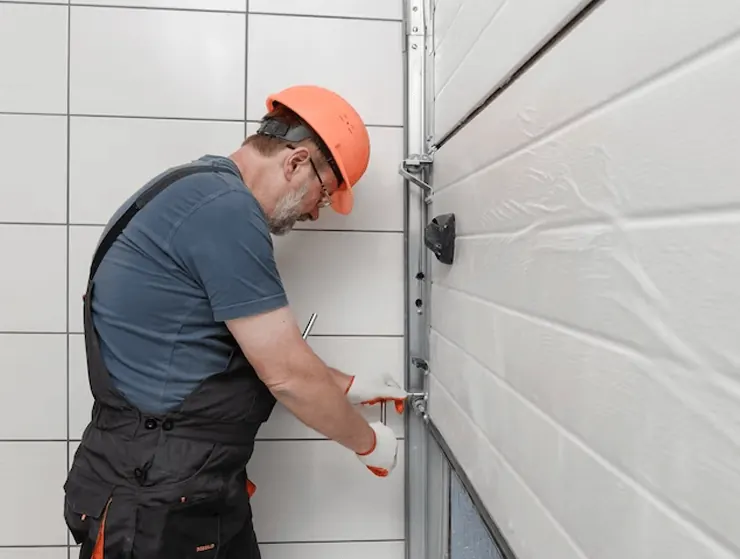
A garage door is one of the largest moving objects in your home, and dozens of parts have to cooperate for it to glide the way it should. When one of them wears out or slips out of adjustment, you feel it right away. We repair the full range of issues, including:
- Doors that stick, sag, bind, or catch partway through the travel
- Doors that won't open or won't close — or reverse the moment they touch the floor
- Loud, grinding, or rattling operation that echoes through the house
- Off-balance doors that feel heavy by hand or drift up and down on their own
- Broken springs, frayed or off-track cables, bent rollers, and worn hinges
- Openers that hum without moving, respond intermittently, or ignore the remote
Around the Clock service guide
What's usually behind it
Most repairs trace back to a handful of culprits. Torsion and extension springs carry the door's weight and wear out with use; when one breaks, the door suddenly feels impossibly heavy or won't lift at all. Cables and rollers can slip off the track, leaving the door crooked and jammed. A door that's out of balance forces the opener to strain, which is often what turns a quiet system into a noisy one. And safety sensors knocked out of alignment are a classic reason a door reverses before it closes. We diagnose the actual cause rather than swapping parts and hoping.
Around the Clock service guide
scheduled and scheduled service emergency repair
A stuck door isn't just annoying — it can leave your home unsecured or your vehicle stranded. That's why we offer scheduled garage door repair and true garage door garage door repair, including nights and weekends. If you're searching for garage door repair near me at an hour when most shops are closed, that's exactly the gap we exist to fill. For emergency garage door repair — a broken spring, a door frozen open, a car you can't get out — call and we'll get a technician moving toward you.
Around the Clock service guide
Residential and commercial
We work on both sides of the door. For homeowners, that means sectional doors, quiet belt- and chain-drive openers, and the everyday wear that comes from thousands of cycles a year. For businesses, warehouses, and shops, it means heavier commercial doors and openers that have to keep a workday running. Service appointments are scheduled after the door condition, location, access, and system details are reviewed.
Not every worn door needs replacing, and we'll tell you honestly which way we'd lean. A single failed spring, a bent roller, or a misaligned sensor on an otherwise solid door is almost always a straightforward repair. Replacement makes more sense when the door itself is cracked, badly rusted, or so old that parts keep failing one after another. Because a repair keeps you moving faster and costs less, we start there whenever it's the right call — and only recommend a new door when repairing the old one would just be renting time.
Door acting up right now? Around The Clock Garage Door is available for scheduled appointments across the Bay Area and Northern California. Call (650) 489-6631 to describe the door condition and request a scheduled appointment.
Around the Clock service guide
Garage Door Spring Repair and Replacement
Your garage door can weigh anywhere from 130 to well over 300 pounds, and the springs are what make that weight feel light enough for a small motor, or your own arm, to lift. When a spring breaks, the whole system loses the counterbalance it depends on. That is why a snapped spring is one of the most common reasons a door suddenly refuses to open. Service appointments are scheduled after the door condition, location, access, and system details are reviewed.
Around the Clock service guide
Torsion vs. Extension Springs
Garage doors use one of two spring systems, and knowing which one you have helps you understand the repair.
Torsion springs sit on a metal shaft above the door opening and store energy by twisting tightly as the door closes. They are common on heavier doors and tend to run more smoothly and last longer. Because they are wound under enormous tension, they have to be adjusted with proper winding bars, never pliers or a screwdriver.
Extension springs run along the horizontal tracks on either side of the door and stretch and contract as it moves. They are often found on lighter, single-car doors. A safety cable should run through each extension spring so that if it breaks, the pieces stay contained instead of flying across the garage.
Around the Clock service guide
Signs of a Broken or Failing Spring
- A loud bang from the garage. A breaking spring releases stored energy all at once and often sounds like a firecracker or a heavy tool hitting the floor.
- The door won't lift, or the opener strains and stops. Without spring tension, the motor is trying to lift the door's full dead weight and usually can't.
- A visible gap in the spring. A two- to three-inch separation in the coil above the door is the clearest sign a torsion spring has snapped.
- The door looks crooked or hangs unevenly. When one extension spring fails, that side sags and the door binds in the track.
- The door feels far heavier by hand. Weak springs lose their counterbalance long before they break completely.
Around the Clock service guide
Why Springs Wear Out
Springs are rated in cycles, where one open and one close equals a single cycle. A spring is built for a set number of cycles, and every trip up and down uses one. A household that runs the door six or eight times a day burns through cycles faster than the owner realizes, which is why springs eventually fatigue and fail even when nothing was misused. Cool Bay Area mornings, rust, and skipped lubrication all shorten that lifespan. When one spring goes on a two-spring door, we usually recommend replacing both, since the second is the same age and close behind.
Around the Clock service guide
Why DIY Spring Work Is Dangerous
Of every repair a garage door needs, spring work is the one to leave to a professional. A wound torsion spring holds hundreds of pounds of force, and a slip or the wrong tool can cause serious injury. The correct winding bars, clamps, and balance adjustments matter as much as the part itself. Our technicians carry the right springs and tools, set the tension correctly, and test the door's balance before we leave, so it runs safely and the opener isn't left straining.
Around the Clock service guide
Scheduled Spring Replacement
A door stuck down can trap a car, a delivery, or a whole workday. Call (650) 489-6631 to describe the door condition and request a scheduled appointment. We match the spring to your door's weight and size rather than forcing a one-size part, so your door lifts the way it should.
Have a broken spring or a door that suddenly feels too heavy to lift? Call (650) 489-6631 to describe the door condition and request a scheduled appointment. Service appointments are scheduled after the door condition, location, access, and system details are reviewed.
Around the Clock service guide
Service overview - planning details
When your garage door opener quits, the whole door turns into a heavy, awkward slab you have to wrestle by hand. Around The Clock Garage Door focuses on getting that motor, remote, and safety system working again for homeowners and businesses across the San Francisco Bay Area and Northern California. Service appointments are scheduled after the door condition, location, access, and system details are reviewed.
Around the Clock service guide
Common garage door opener problems we fix
Most opener calls fall into a handful of familiar patterns. Naming the symptom helps us show up ready with the right parts.
- The opener won't respond at all — no hum, no lights. This usually points to power, the logic board, or a wall-button wiring fault rather than the door itself.
- The motor runs but the door won't move — a classic sign of stripped or worn drive gears, a broken trolley, or a disconnected carriage.
- The door reverses before it closes — often misaligned or dirty safety sensors, travel-limit settings, or an obstruction along the tracks.
- Remotes and keypads stop working — dead batteries, lost programming, a failing receiver, or interference. Garage door remote repair is frequently a quick fix, and we can reprogram or replace the transmitter on site.
- Grinding, straining, or slow travel — worn gears, a struggling motor, or a door that has fallen out of balance and is overworking the opener.
Around the Clock service guide
Every drive type: chain, belt, and screw
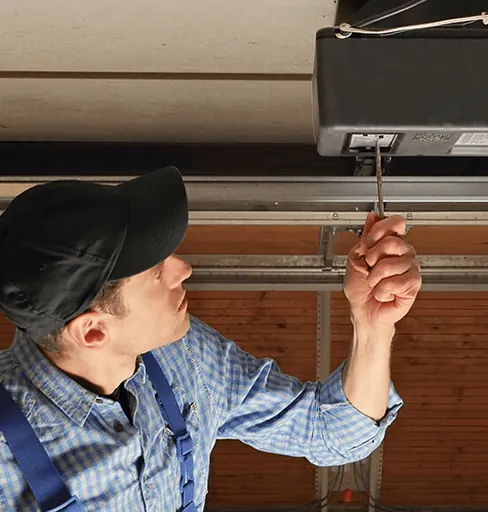
Openers aren't one-size-fits-all, and the drive system changes how we diagnose and repair them. Chain-drive units are durable and economical but noisier, which is fine for a detached garage. Belt-drive openers run quietly, a real difference when there's a bedroom over the garage. Screw-drive models have fewer moving parts and pull heavier doors well. We service and repair all three, and if a unit is past a sensible repair, we'll walk you through a matching replacement.
Around the Clock service guide
Wi-Fi and smart openers
Newer openers connect to your phone so you can open, close, and check the door from anywhere. Many models use app-based platforms such as myQ, and the exact features vary by brand and firmware. If you want a Wi-Fi garage door opener, we can install a smart-capable unit or, in many cases, add a compatible controller to an opener you already own. We'll be straight with you about what your specific model and home network can actually support before any work begins.
Around the Clock service guide
Safety sensors and auto-reverse
The photo-eye sensors near the bottom of the tracks are what stop a closing door from crushing a car, a pet, or a child. When they get bumped, dusty, or wired loose, the door refuses to close or reverses on its own. We realign, clean, and test these sensors along with the auto-reverse force settings so the safety system does exactly what it's built to do.
Around the Clock service guide
New opener installation and replacement
Sometimes a repair isn't the smart call. A decades-old motor, obsolete parts, or repeated failures often mean a new unit is the better value. Our garage door opener installation and replacement service includes sizing the motor to your door's weight, mounting and wiring the unit, programming remotes and keypads, and testing balance, travel limits, and safety reverse before we leave. We install for both residential and commercial doors.
Service appointments are scheduled after the door condition, location, access, and system details are reviewed. Call (650) 489-6631 and we'll get your door moving again.
Around the Clock service guide
Describe the condition before operating the door
A useful around the clock garage door assessment starts with the door's position, the last normal cycle, the control that was used, and the first sound or movement that changed. Note whether the door is closed, partly open, crooked, detached, or resting on an object. These details help separate a control problem from a lifting, track, cable, roller, or panel problem without repeatedly cycling a damaged system.
Photographs taken from a safe position can show the full inside face of the door, the opener label, the spring arrangement, both vertical tracks, and visible cable or roller differences. Do not stand beneath an unstable door or move parts to improve the photograph. The installed system still needs direct inspection and measurement before compatibility or repair scope is confirmed.
Around the Clock service guide
Keep the safety boundary clear
The safe first step for around the clock garage door depends on stability. A crooked, hanging, unusually heavy, or partly detached door should be left in place with people and vehicles outside its travel path. Springs, cables, drums, bottom brackets, and loaded tracks can store or transfer substantial force. Pulling, loosening, cutting, or improvising around those parts can turn a repairable condition into a sudden drop.
If the door is fully closed and stable, avoid repeated opener cycles while arranging an assessment. If it is open or partly open, do not treat the opener as a support device. Disconnecting a door is not automatically safe because a failed spring or cable can make the full door weight difficult to control.
Keep children, pets, stored equipment, and foot traffic away from the opening until the door's support and lifting condition are known. A temporary visual boundary is safer than relying on someone to remember that the door should not be touched.
Around the Clock service guide
Verify the complete operating system
Completion of around the clock garage door should include more than seeing the door move once. The relevant sequence may include balance, smooth manual travel, even section movement, cable seating, roller and track observation, hardware review, opener travel settings, photo-eye response, reversal behavior, remote operation, keypad response, and final closed-position alignment.
The handoff should explain what changed, what was tested, and what the owner should watch during ordinary use. If a test cannot be completed because another condition remains, that limitation belongs in the service record. Clear verification makes the finished condition easier to evaluate than a simple statement that the door is working.
Around the Clock service guide
Match parts to the installed door
Compatibility matters during around the clock garage door. Door weight, height, track radius, shaft and drum arrangement, spring dimensions, opener type, panel construction, available headroom, and existing mounting points can change the correct part or procedure. A component that looks similar may carry a different load rating or geometry, so measurements and model information should guide selection instead of appearance alone.
When an original component is unavailable, the recommendation should identify the compatible specification rather than promise a brand match that has not been confirmed. Ask what was measured, what rating or size is required, whether paired components should be evaluated together, and how the selected part will be checked through the complete operating range after installation.
Around the Clock service guide
Compare repair and replacement using condition
The repair-versus-replacement decision for around the clock garage door should use condition, compatibility, expected remaining service, and the effect on the rest of the system. One worn component on an otherwise sound door may support a focused repair. Repeated failures, unavailable matching sections, widespread corrosion, severe impact damage, or incompatible control hardware may justify a broader option review.
Ask for the reason behind the recommendation and what a smaller repair would or would not solve. Replacement can offer practical benefits, but those benefits should be tied to the actual opening, hardware, controls, insulation needs, and owner priorities rather than a generic upgrade pitch.
Around the Clock service guide
Make the estimate easy to compare
A useful around the clock garage door estimate names the work, major components, labor scope, testing, disposal or haul-away when relevant, and conditions that could change the price after the system is opened or measured. It should distinguish a diagnostic or service charge from the repair amount. Clear scope is more useful than a headline price that leaves necessary items undefined.
Before approving work, confirm whether the scope covers paired parts, fasteners, brackets, adjustments, programming, safety-reversal checks, travel-limit settings, balance testing, and cleanup as applicable. Ask how changes will be authorized if inspection reveals a different configuration. These questions make unlike proposals easier to compare without assuming they represent the same work.
Around the Clock service guide
Prepare access without disturbing the failure
Preparation for around the clock garage door should improve access without moving a questionable door. Clear stored items from the side walls, opener area, and safe work zone when possible. Move vehicles only if they can be moved without operating or passing beneath an unstable door. Provide gate, parking, and interior-access details, and identify electrical controls that may be relevant to the opener system.
Keep remotes, keypads, vehicle controls, and available model documents ready. Explain recent power interruptions, impacts, unusual weather exposure, manual operation, or previous repair attempts. That history can reveal whether the present symptom is isolated or follows a change elsewhere in the system.
Around the Clock service guide
Protect the corrected system with observation
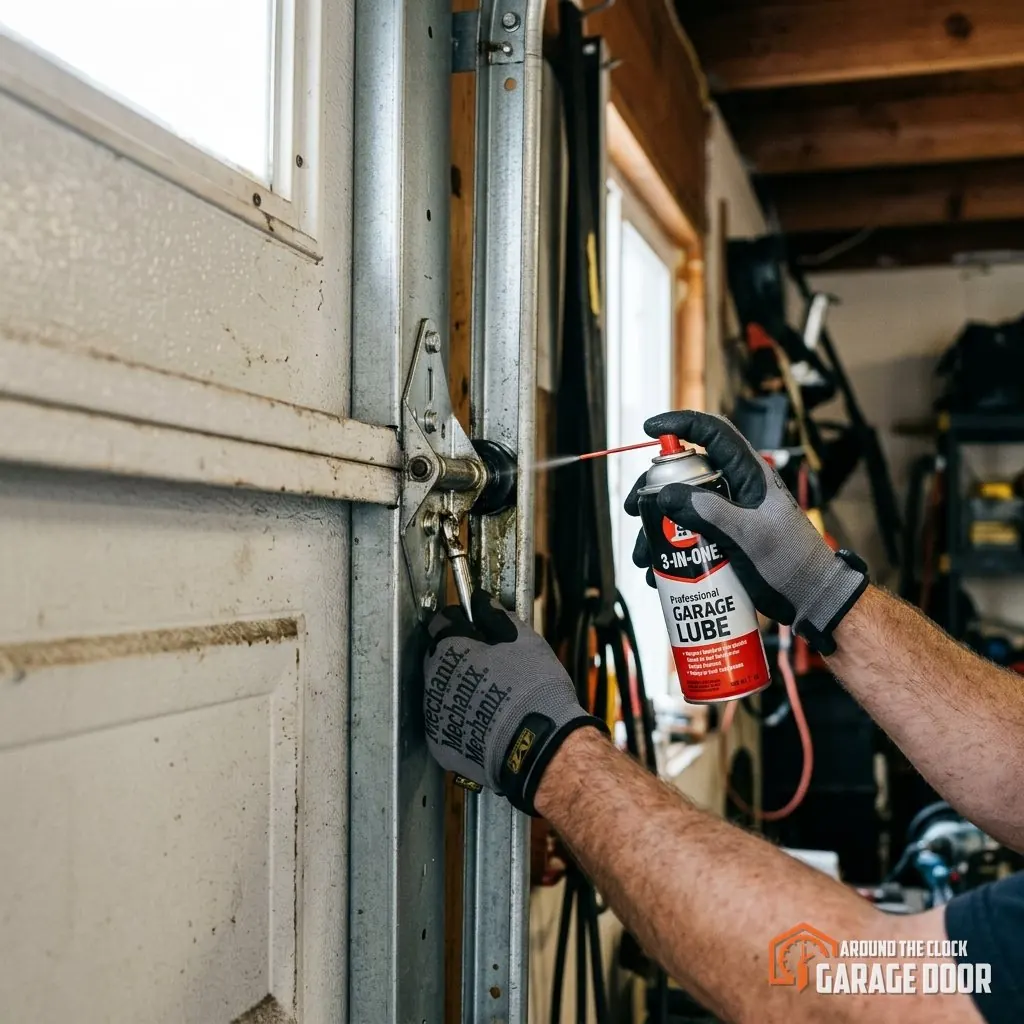
Maintenance after around the clock garage door should follow the installed hardware and manufacturer guidance. Owners can keep photo eyes clean, observe the door's path, listen for new changes, keep tracks free of debris, and avoid hanging or storing items on door components. Lubrication should use appropriate products and points; tracks and safety sensors should not be coated indiscriminately.
Watch for uneven travel, delayed response, new vibration, frayed cable strands, loose-looking hardware, gaps in the weather seal, repeated opener reversal, or changes in door balance. Early reporting can limit secondary damage because the shared-load system has not been forced through many failed cycles.
Plan the next step