
Around the Clock resource
Emergency Garage Door Repairs: What You Need to Know
Around The Clock Garage Door handles emergency garage door repair work fast and safely. If your door is stuck, off track, or has a broken garage door spring, call (650) 489-6631. We help with garage door opener repair, garage door spring replacement, and garage door off track repair. A clear garage door repair estimate can help you choose the right fix.
 Springs, openers, tracks, cables, rollers, panels, and installation
Service system
Understand the problem before choosing the work
Garage door resource
Garage door basics
Garage doors are moving systems. The door, opener, springs, cables, rollers, and tracks all work together. The opener moves the door. The springs carry most of the weight. That is why a broken garage door spring can make the door feel very heavy or stop it from moving at all.
Doors can be made of steel, wood, or fiberglass. They may use chain, belt, screw, or direct-drive openers. Even simple parts can fail when one piece wears out.
Garage door resource
Common causes of emergencies
Emergency calls often start with one of these problems:
Regular wear is common, but a hit from a car or an object in the track can also cause sudden trouble.
- A broken garage door spring
- A door that has gone off track
- A faulty opener or power issue
- Worn cables, rollers, or hinges
- Weather changes that make parts shrink or expand, which can lead to working issues
- Poor garage door maintenance
Garage door resource
Garage door safety tips for the first response
In an emergency, safety comes first.
These garage door safety tips can keep a bad problem from getting worse.
- Keep children, pets, and vehicles away.
- Do not stand under a crooked, hanging, or partly detached door.
- Do not keep cycling the opener.
- Do not pull, cut, or loosen springs or cables.
- If the door is closed and stable, leave it in place until help arrives.
- If the door is open or partly open, do not use the opener as support.
Garage door resource
What to tell the technician
Good details help the tech find the fault faster.
Share:
Photos from a safe spot can also help. Take the full inside face of the door, the opener label, the spring layout, both vertical tracks, and any cable or roller change you can see.
The installed system still needs direct inspection and measurement before fit or repair scope is confirmed.
- the door position
- the last normal cycle
- the control you used
- the first sound or movement that changed
- whether the door is closed, partly open, crooked, detached, or resting on an object
Garage door resource
DIY fixes for minor garage door issues
Some small problems can be handled at home.
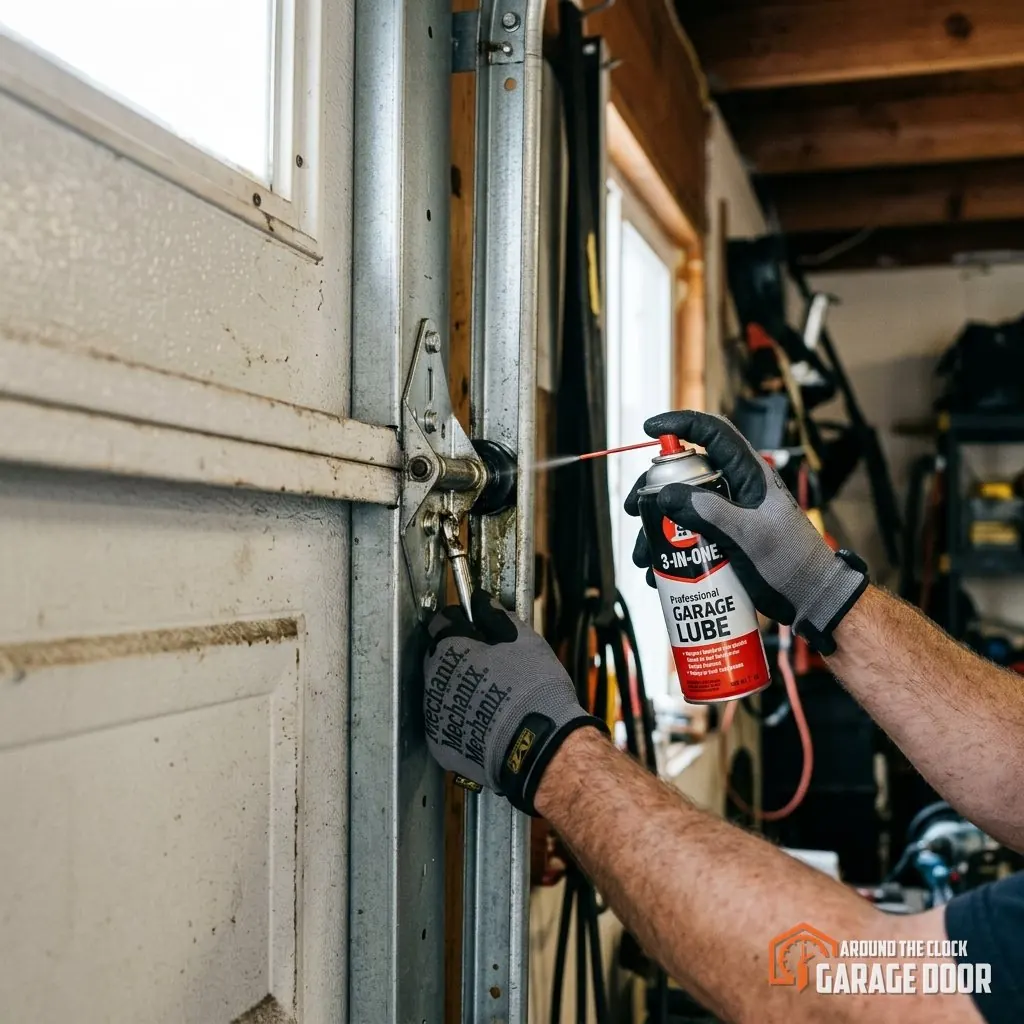
A squeak may only need a little silicone-based lubricant. Misaligned photo eyes may need a gentle reset. This kind of diy garage door repair can save time if the issue is mild.
But stop if you feel strong resistance, hear loud noise, or see a heavy or unstable door. Small tasks are fine. High-tension parts are not.
Garage door resource
When to call a professional
Call a pro right away if you see:
A garage door off track repair should be left to a trained tech. So should most spring work. High tension can cause injury, so do not try to force it.
- a broken garage door spring
- a door off track
- damaged cables, rollers, or panels
- a door that will not open or close
- a noisy or weak opener
- a door that feels very heavy by hand
Garage door resource
Prevent future breakdowns
Good habits can reduce future calls.
Small checks now can stop a larger repair later.
- Do regular garage door maintenance
- Check door balance now and then
- Keep tracks clear of dirt and debris
- Replace worn weather seals
- Change opener batteries when needed
- Use a garage door repair checklist for routine checks
- Plan garage door spring replacement before parts fail from age
Garage door resource
Why regular maintenance matters
Regular garage door maintenance helps the door last longer and work better. It can also improve safety. A tech can spot loose parts, worn rollers, weak springs, or a slow opener before they turn into a full emergency.
Clean and well-oiled parts move more smoothly. Weather can still affect the system, but care can limit the damage. The goal is simple: fewer surprises, lower repair cost, and a safer door.
Garage door resource
Verify the full system after repair
A repair is not done just because the door moves once.
A full check should include:
The tech should also explain what changed, what was tested, and what you should watch next. Good notes make the result easier to trust. This is a key part of a garage door repair checklist.
- balance
- smooth manual travel
- even section movement
- cable seating
- roller and track review
- hardware review
- opener travel limits
- photo-eye response
- reversal test
- remote and keypad use
- final closed alignment
Garage door resource
Match parts to the door
The right part must fit the door you have.
Door weight, height, track shape, shaft and drum setup, spring size, opener type, panel build, headroom, and mount points all matter. A part that looks close may still be wrong.
If the original part is not available, the tech should name the correct spec, not promise a brand match that has not been checked. Good fit matters more than a fast guess.
Garage door resource
Repair or replace?
Some doors need repair. Others need more work.
A single worn part on a sound door may be a good repair. But repeated failures, no matching sections, heavy rust, severe impact damage, or mismatched control hardware may point to a larger fix.
Ask why the job is being recommended. Ask what a smaller repair would solve, and what it would not solve. The best choice should match the opening, the hardware, the controls, the insulation needs, and your goals.
Garage door resource
Make the estimate easy to compare
A clear garage door repair estimate should list:
It should also separate the service fee from the repair cost.
Before you agree, ask if the scope includes paired parts, fasteners, brackets, adjustments, programming, safety checks, travel-limit settings, balance testing, and cleanup. Clear scope makes it easier to compare providers.
- the work to be done
- the main parts
- labor
- testing
- haul-away or disposal if needed
- any condition that could change the price after inspection
Garage door resource
Prepare access without moving the fault
You can help the visit go faster without moving a bad door.
Clear items from the side walls, opener area, and safe work zone. Move vehicles only if it can be done without passing under an unstable door. Share gate, parking, and indoor access details.
Keep remotes, keypads, vehicle controls, and any model papers ready. Also mention power cuts, impacts, bad weather, manual use, or prior repair attempts. That history can point to the real cause.
Garage door resource
Protect the fixed system
After the repair, keep an eye on the door.
Watch for uneven travel, delay, new shake, frayed cable strands, loose hardware, weather seal gaps, repeated reversal, or balance changes. Early reports can stop more damage.
- Keep photo eyes clean
- Watch the door path
- Listen for new noise
- Keep tracks free of debris
- Do not hang items on door parts
- Use lube only on the right points
- Do not coat tracks or safety sensors at random
Garage door resource
Final step
If you are not sure what to do, describe the door position, the sound, and the last normal cycle. Then call (650) 489-6631.
Common questions
Answers tied to the visible service guidance
How do I quickly tell if my garage door issue is an emergency or can wait?
Start with safety. If the door is crooked, very heavy, partly detached, or off its tracks, treat it as an emergency. Keep people and cars away, do not cycle the opener, and call a pro. If the door is closed, stable, and the issue seems small, such as a squeak or a sensor issue, you may try simple checks like lube or photo-eye alignment. Stop if you hear noise or feel resistance.
What should I have ready when I call for service?
Share the door position, the last normal cycle, the control you used, and the first sound or movement that changed. Note whether the door is closed, partly open, crooked, or resting on something. Safe photos of the inside face, opener label, spring layout, vertical tracks, and cable or roller changes can help. Also give access notes, electrical info, and any recent impact, power cut, or repair attempt.
When is DIY okay, and when should I avoid it?
DIY is best for small tasks like lubing hinges or rollers with silicone-based lubricant and gently realigning photo eyes. Avoid DIY if you suspect broken springs, damaged cables, a door off track, strong misalignment, or a door that is hard to move by hand. Those jobs involve high tension and can cause injury.
How should a proper repair be checked before the tech leaves?
The tech should do more than open and close the door once. They should check balance, smooth manual travel, even section movement, cable seating, rollers and tracks, hardware, opener travel limits, photo-eye response, safety reversal, remote and keypad use, and final closed alignment. You should also get a note of what changed, what was tested, and any limits that remain.
What should I look for in a garage door repair estimate?
The estimate should list the exact work, main parts, labor, testing, disposal if needed, and any condition that could change the price after inspection. It should split the service fee from repair cost and say whether paired parts, fasteners, brackets, adjustments, programming, safety checks, travel limits, balance testing, and cleanup are included. Ask how changes will be approved if the door setup is not what was expected.
Plan the next step