
Around the Clock resource
Professional Garage Door Repair
A garage door is the largest moving object in most homes — a system of springs, cables, rollers, and panels that can weigh well over 150 pounds and cycles thousands of times a year. Professional garage door repair means treating it as the engineered mechanism it is: diagnosing the true cause of a problem, using the correct matched parts, and leaving the door balanced, safe, and reliable. It's the difference between a lasting fix and a band-aid that fails again a month later.
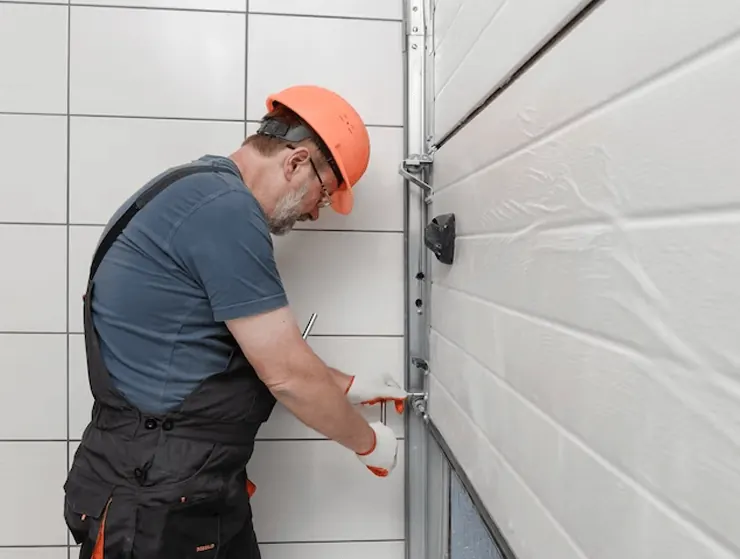 Springs, openers, tracks, cables, rollers, panels, and installation
Service system
Understand the problem before choosing the work
Garage door resource
What professional garage door repair really means
Garage door resource
Safety first: springs and cables are under real tension
The single biggest reason to hire a pro is safety. Torsion and extension springs store enormous energy so the opener — or your arm — doesn't have to lift the full weight of the door. A spring or lifting cable that's wound tight, stretched, or corroded can release that force suddenly. Every year homeowners are seriously injured trying to swap a spring with the wrong tools. Expert garage door repair technicians use winding bars, secure the door, and follow a procedure that keeps stored energy under control. Springs, cables, and the bottom-bracket area are jobs to leave to a trained professional.
Garage door resource
Correct diagnosis beats part-swapping
A door that won't open can point to a broken spring, a stripped opener gear, a snapped cable, a misaligned safety sensor, or a door that's simply out of balance. A quality technician tests the whole system before quoting anything — disconnecting the opener to check the door's balance by hand, inspecting both springs, examining cables and rollers, and checking sensor alignment and track condition. Cheaper outfits often swap the most obvious part, collect payment, and move on, only for the real issue to resurface. Proper diagnosis is what makes professional garage door repair worth it.
Garage door resource
Proper tools and matched parts
Garage door hardware is not one-size-fits-all. Springs are rated by wire size, inside diameter, and length for a specific door weight and height; the wrong spring throws the door out of balance and burns out the opener. A professional measures and matches the correct spring, uses the right rollers and hinges for your door type, and calibrates opener force and travel limits. Correctly matched and installed parts run quieter, last longer, and keep the safety auto-reverse working the way it should.
Garage door resource
What a professional handles
- Broken springs — torsion and extension, replaced in matched pairs where appropriate
- Frayed or snapped cables and worn lift drums
- Openers — gears, logic boards, sensors, remotes, and force/limit calibration
- Rollers, hinges, and bearings that grind, bind, or squeal
- Bent tracks and off-track doors re-aligned or replaced
- Dented or damaged panels and worn weather seals
- Full safety tune-ups — balance, alignment, and auto-reverse testing
Garage door resource
Warranty on parts and workmanship
One clear marker of a professional is a written warranty covering both the parts installed and the labor. Reputable technicians stand behind matched components and their own workmanship, and they explain what's covered before starting. If a shop won't put its warranty terms in writing, that's a good reason to look elsewhere.
Garage door resource
How to spot a quality local pro
Look for a company that is professional, gives a clear written estimate before work begins, and inspects the whole door rather than pushing a single part. Good signs include transparent pricing, a warranty on parts and labor, technicians who explain your options, and a willingness to answer questions without pressure. garage door repair also means your home is protected if something goes wrong on the job. Pricing varies with the part and the door — a spring replacement typically runs in the low hundreds, while opener or full-door work costs more — so always ask for a free, itemized quote rather than accepting a vague number over the phone.
Garage door resource
Around The Clock: your scheduled service Bay Area pro
Around The Clock Garage Door provides professional garage door repair for homes and businesses across the San Francisco Bay Area, Northern California, and the Central Valley. Whether you have a broken spring in the middle of the night, a door stuck off its track, or an opener that quit, our technicians diagnose the real problem, use matched parts, and back their work. Service appointments are scheduled after the door condition, location, access, and system details are reviewed.
Call Around The Clock Garage Door now at (650) 489-6631 for fast, expert service and a free repair quote.
Garage door resource
Describe the condition before operating the door
A useful professional garage door repair assessment starts with the door's position, the last normal cycle, the control that was used, and the first sound or movement that changed. Note whether the door is closed, partly open, crooked, detached, or resting on an object. These details help separate a control problem from a lifting, track, cable, roller, or panel problem without repeatedly cycling a damaged system.
Photographs taken from a safe position can show the full inside face of the door, the opener label, the spring arrangement, both vertical tracks, and visible cable or roller differences. Do not stand beneath an unstable door or move parts to improve the photograph. The installed system still needs direct inspection and measurement before compatibility or repair scope is confirmed.
Garage door resource
Keep the safety boundary clear
The safe first step for professional garage door repair depends on stability. A crooked, hanging, unusually heavy, or partly detached door should be left in place with people and vehicles outside its travel path. Springs, cables, drums, bottom brackets, and loaded tracks can store or transfer substantial force. Pulling, loosening, cutting, or improvising around those parts can turn a repairable condition into a sudden drop.
If the door is fully closed and stable, avoid repeated opener cycles while arranging an assessment. If it is open or partly open, do not treat the opener as a support device. Disconnecting a door is not automatically safe because a failed spring or cable can make the full door weight difficult to control.
Keep children, pets, stored equipment, and foot traffic away from the opening until the door's support and lifting condition are known. A temporary visual boundary is safer than relying on someone to remember that the door should not be touched.
Garage door resource
Verify the complete operating system
Completion of professional garage door repair should include more than seeing the door move once. The relevant sequence may include balance, smooth manual travel, even section movement, cable seating, roller and track observation, hardware review, opener travel settings, photo-eye response, reversal behavior, remote operation, keypad response, and final closed-position alignment.
The handoff should explain what changed, what was tested, and what the owner should watch during ordinary use. If a test cannot be completed because another condition remains, that limitation belongs in the service record. Clear verification makes the finished condition easier to evaluate than a simple statement that the door is working.
Garage door resource
Match parts to the installed door
Compatibility matters during professional garage door repair. Door weight, height, track radius, shaft and drum arrangement, spring dimensions, opener type, panel construction, available headroom, and existing mounting points can change the correct part or procedure. A component that looks similar may carry a different load rating or geometry, so measurements and model information should guide selection instead of appearance alone.
When an original component is unavailable, the recommendation should identify the compatible specification rather than promise a brand match that has not been confirmed. Ask what was measured, what rating or size is required, whether paired components should be evaluated together, and how the selected part will be checked through the complete operating range after installation.
Garage door resource
Compare repair and replacement using condition
The repair-versus-replacement decision for professional garage door repair should use condition, compatibility, expected remaining service, and the effect on the rest of the system. One worn component on an otherwise sound door may support a focused repair. Repeated failures, unavailable matching sections, widespread corrosion, severe impact damage, or incompatible control hardware may justify a broader option review.
Ask for the reason behind the recommendation and what a smaller repair would or would not solve. Replacement can offer practical benefits, but those benefits should be tied to the actual opening, hardware, controls, insulation needs, and owner priorities rather than a generic upgrade pitch.
Garage door resource
Make the estimate easy to compare
A useful professional garage door repair estimate names the work, major components, labor scope, testing, disposal or haul-away when relevant, and conditions that could change the price after the system is opened or measured. It should distinguish a diagnostic or service charge from the repair amount. Clear scope is more useful than a headline price that leaves necessary items undefined.
Before approving work, confirm whether the scope covers paired parts, fasteners, brackets, adjustments, programming, safety-reversal checks, travel-limit settings, balance testing, and cleanup as applicable. Ask how changes will be authorized if inspection reveals a different configuration. These questions make unlike proposals easier to compare without assuming they represent the same work.
Garage door resource
Prepare access without disturbing the failure
Preparation for professional garage door repair should improve access without moving a questionable door. Clear stored items from the side walls, opener area, and safe work zone when possible. Move vehicles only if they can be moved without operating or passing beneath an unstable door. Provide gate, parking, and interior-access details, and identify electrical controls that may be relevant to the opener system.
Keep remotes, keypads, vehicle controls, and available model documents ready. Explain recent power interruptions, impacts, unusual weather exposure, manual operation, or previous repair attempts. That history can reveal whether the present symptom is isolated or follows a change elsewhere in the system.
Garage door resource
Protect the corrected system with observation
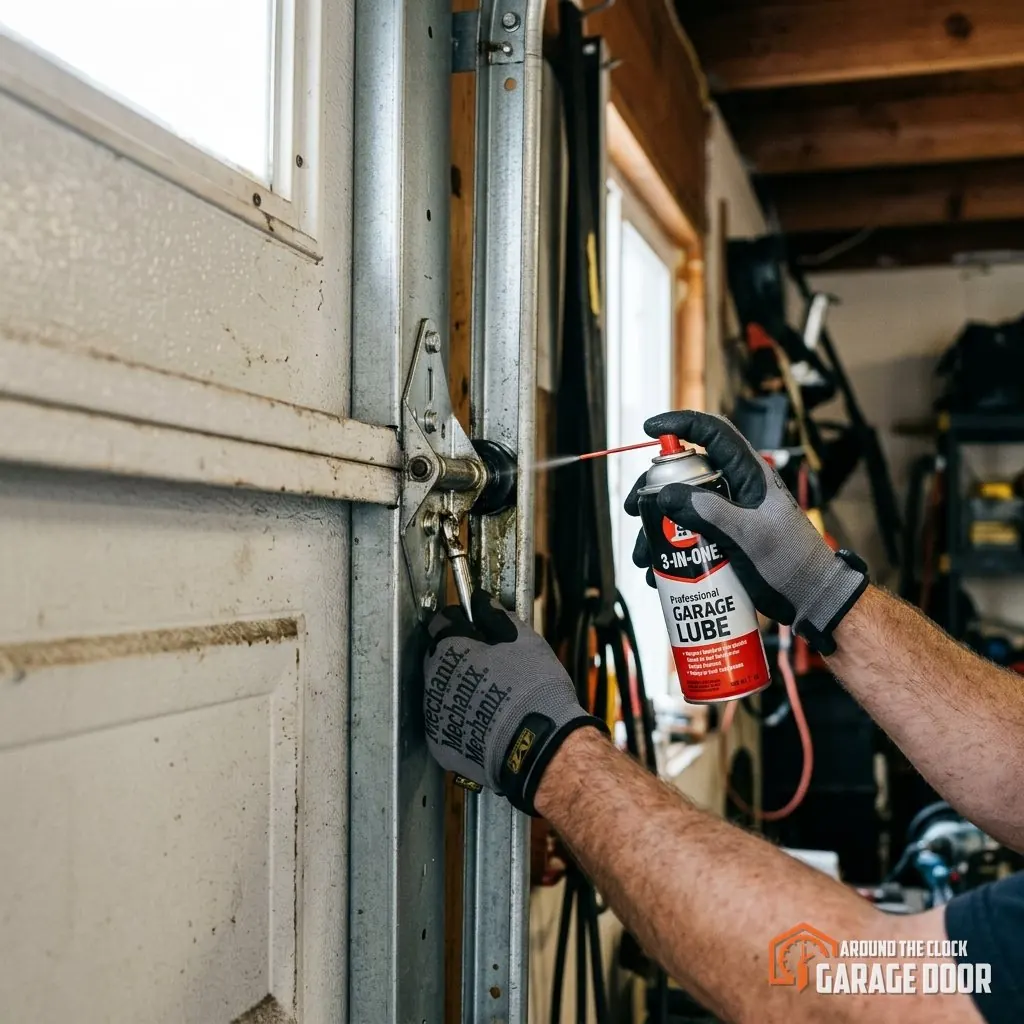
Maintenance after professional garage door repair should follow the installed hardware and manufacturer guidance. Owners can keep photo eyes clean, observe the door's path, listen for new changes, keep tracks free of debris, and avoid hanging or storing items on door components. Lubrication should use appropriate products and points; tracks and safety sensors should not be coated indiscriminately.
Watch for uneven travel, delayed response, new vibration, frayed cable strands, loose-looking hardware, gaps in the weather seal, repeated opener reversal, or changes in door balance. Early reporting can limit secondary damage because the shared-load system has not been forced through many failed cycles.
Common questions
Answers tied to the visible service guidance
Can I replace a garage door spring myself?
It's strongly discouraged. Springs hold enough stored tension to cause serious injury if they slip or release, and they require specialized winding bars and a careful procedure. Cable and bottom-bracket work carries the same risk. These are jobs for a trained, properly equipped professional.
How do I know whether I need a spring, a cable, or a new opener?
Often you can't tell from the symptom alone — a door that won't open could be a broken spring, a snapped cable, a stripped opener gear, or a blocked safety sensor. A professional tests the whole system, including the door's hand-balance with the opener disconnected, so the true cause is fixed rather than the most obvious guess.
What does professional garage door repair typically cost?
It varies by the part, the door, and its condition. As a general guide, a spring replacement often runs in the low hundreds, while opener repairs or full-door work cost more. The honest answer is that pricing depends on your specific door, so ask for a free, itemized quote before any work begins.
Do professional repairs come with a warranty?
A reputable company backs both the parts it installs and its own labor with a written warranty, and explains the terms before starting. If a provider won't put its warranty in writing, treat that as a warning sign.
Service appointments are scheduled after the door condition, location, access, and system details are reviewed.
Yes. Around The Clock Garage Door is available for scheduled appointments, every day, serving residential and commercial customers across the San Francisco Bay Area, Northern California, and the Central Valley. Call (650) 489-6631 to describe the door condition and request a scheduled appointment.
Plan the next step