
Around the Clock resource
Step-by-Step Guide to Changing Garage Door Rollers
Garage door rollers look small, but they're a big deal: they guide the door smoothly along the track, reduce vibration, and, when they're worn, become the number one reason for grinding, rattling, and squeaking. This guide walks through pricing, roller options, and practical DIY replacement steps, including how to avoid bending the track in the process.
 Springs, openers, tracks, cables, rollers, panels, and installation
Service system
Understand the problem before choosing the work
Garage door resource
Cost to Replace Garage Door Rollers
Basic steel rollers without bearings run about $2 to $6 each. Steel rollers with bearings run $6 to $15 each. Nylon rollers with bearings run $8 to $20 each. Premium, extra-quiet sealed-bearing rollers run $15 to $35 each. A standard double door often uses 10 to 12 rollers, and a single door uses 8 to 10, so parts alone can run $30 to $300 or more.
Professional replacement, installed, typically runs $150 to $300 for a single door, $200 to $450 for a double door, and $400 to $700 or more for high-lift, heavy, or custom doors. Common add-on costs include track alignment ($75-$150), hinge replacement ($10-$30 each), lubrication and inspection ($50-$120), and a full tune-up ($80-$200).
- Basic steel rollers (no bearings): $2-$6 each
- Steel rollers with bearings: $6-$15 each
- Nylon rollers with bearings: $8-$20 each
- Premium sealed-bearing rollers: $15-$35 each
- Professional install: $150-$300 single door, $200-$450 double door, $400-$700+ heavy/custom doors
Garage door resource
When to Replace Garage Door Rollers
Consider replacement when squeaking or screeching returns quickly after lubrication, when you notice visible cracks, chips, flat spots, or wobbling wheels, when the door shakes, jerks, or binds while moving, or when there's excessive vibration. A roller coming out of the track is an urgent safety issue and should be addressed immediately. As a general rule, inspect rollers yearly and plan on replacing them every 5 to 10 years.
Garage door resource
Nylon vs. Steel Rollers
Nylon rollers with bearings run quieter and smoother with less vibration, making them a great fit for attached garages, though lower-quality nylon can crack over time. Steel rollers with bearings are very durable under heavy loads but run louder and vibrate more. Sealed bearings, available in either material, offer a smoother glide and longer life in dirty or humid garages, need less frequent lubrication, and run quieter. For most homes, nylon rollers with sealed bearings are the best overall choice.
Garage door resource
Garage Door Roller Types and Sizes
Wheel diameter commonly runs 2 or 3 inches, and stem length varies, with roughly 4-inch and 7-inch stems being the most common. Bearing count and quality affect how smoothly the roller glides, and the weight and usage of your door affects what roller quality you actually need.
Garage door resource
Can I Replace Garage Door Rollers Myself?
DIY replacement is a reasonable option when you have a standard sectional door, the track and hinges are in good shape, and you're comfortable working with hand tools and basic safety steps. Call a professional instead if the door is extremely heavy or custom, if the track is bent or coming off the wall, if you suspect a cable, drum, or spring issue, or if the rollers or hardware are seized. Roller replacement is usually done without touching the torsion spring system at all, but it still involves working with a heavy moving door, so stop if anything feels unstable.
Garage door resource
DIY Roller Replacement Steps
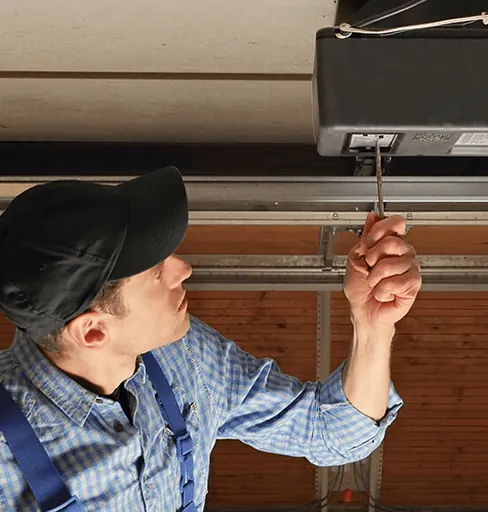
Tools needed: new rollers, an adjustable wrench or socket set, a flathead screwdriver, locking pliers or C-clamps, a step ladder, and garage door lubricant.
Step 1: Disconnect the opener, pull the emergency release, open the door fully, and clamp locking pliers under the bottom roller on both tracks to secure the door in place.
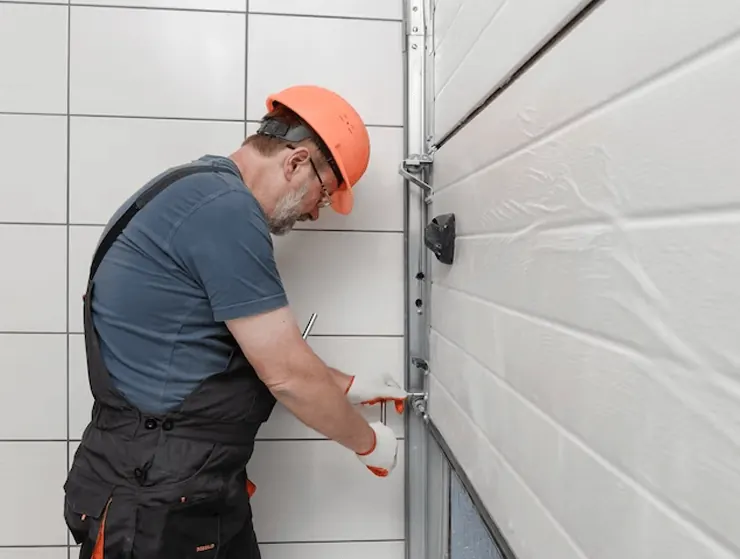
Step 2: Start with the middle rollers, not the bottom bracket. Loosen — don't remove — the hinge bolts, gently lever the hinge to pop the roller stem free, swap in the new roller, and re-tighten.
Step 3: Replace the top rollers using the same method, working carefully.
Step 4: The bottom rollers are connected to the lift cable system, and many DIYers avoid this area for safety reasons. If replacing them requires removing the bottom bracket bolts, stop and hire a professional instead.
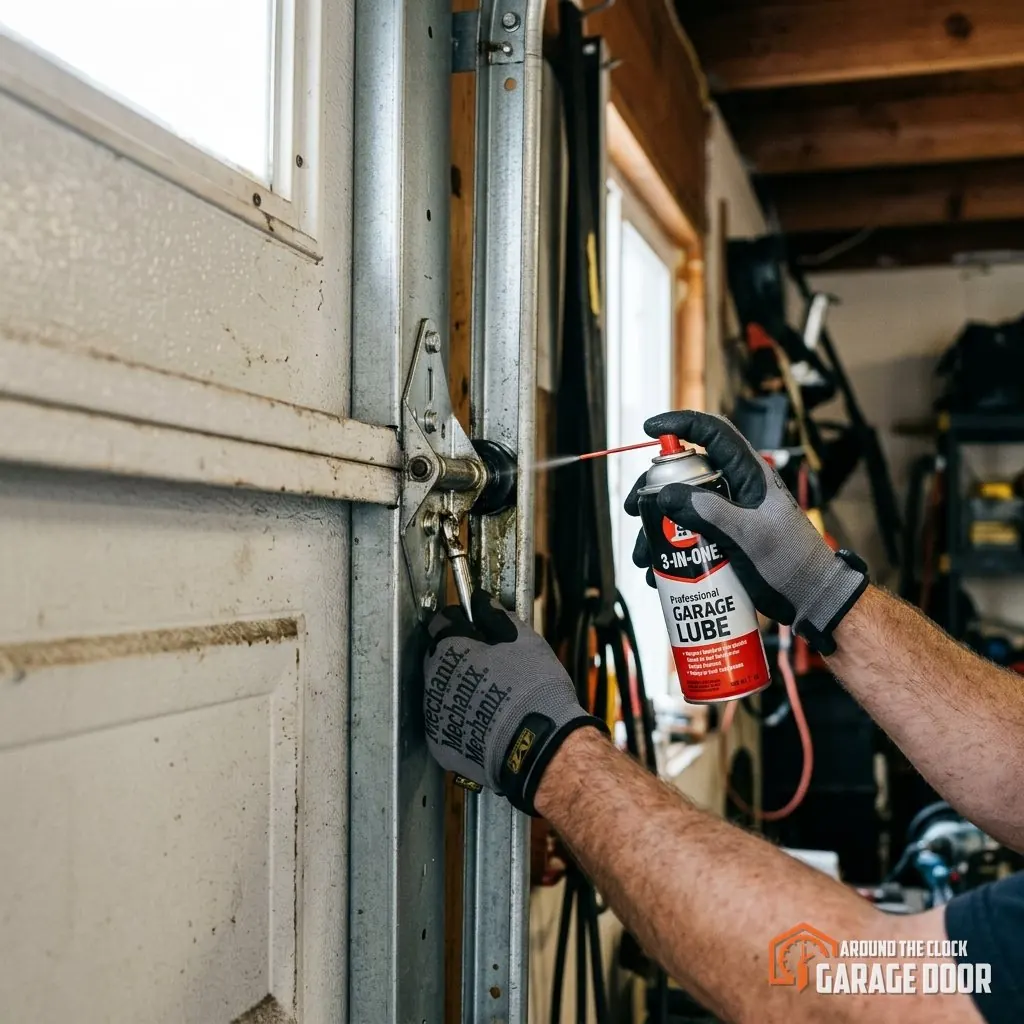
Step 5: Lubricate the new bearings sparingly, remove the clamps, and test the door manually before testing it with the opener.
Garage door resource
How to Replace Rollers Without Bending the Track
Don't yank the track outward to free a roller. Loosen the hinges and brackets instead of forcing the metal, work with the door fully open and secured, use gentle controlled leverage, and if a roller is seized, address the hinge or bolt first rather than twisting the track to compensate.
Garage door resource
Time Estimate
A first-time DIYer should plan on about 1.5 to 3 hours for a full set of rollers. A professional typically completes the same job in 45 to 90 minutes.
Garage door resource
Roller Repair vs. Replacement
Repair generally means cleaning, lubrication, and tightening. Replacement is the right call when wheels are cracked or chipped, bearings grind or wobble, stems are bent, or noise returns quickly after a fresh lubrication.
Garage door resource
Getting a Professional Quote
When comparing quotes, ask whether they're replacing all rollers or only the damaged ones, what roller type is included, whether lubrication and a track check or inspection are part of the service, what warranty applies, and for an itemized labor cost.
Garage door resource
Takeaway
Choose the right roller for your situation — often nylon with sealed bearings — follow the safe replacement steps, and avoid forcing the track. If the job involves the bottom brackets or cables, hire a technician for both safety and long-term reliability.
Plan the next step